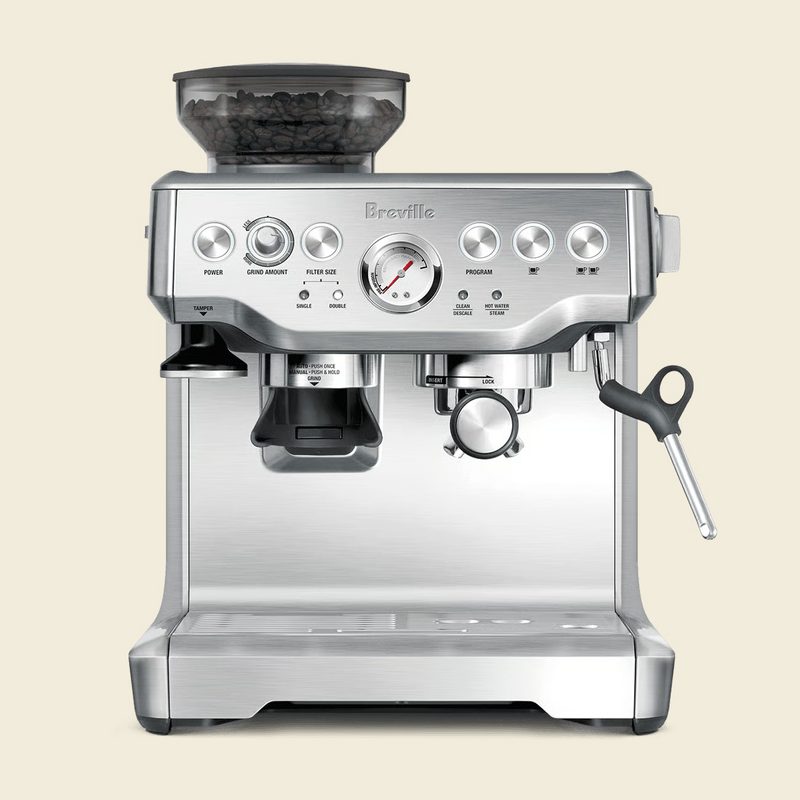
9.3/10
Breville Barista Express Espresso Machine BES870XL, Brushed Stainless Steel
Breville
Highest weighted score in the category — 9.3/10.
Tip: add it to your Amazon cart while you decide — it stays saved there, with no obligation to buy.
DATA-CERTIFIED · NO SPONSORS · SPECS ONLY · UPDATED MONTHLY
As an Amazon Associate I earn from qualifying purchases.
Flip any espresso listing and you'll see 15, 19, even 20 bars trumpeted. It is the least useful number on the box — here is why, and what to look at instead.
Affiliate disclosure: this guide contains links to Amazon. If you buy through them we may earn a commission at no extra cost to you. Rankings here are computed from official specs and owner-review counts — commissions never enter the formula.
The shortlist
The leaders on the signals that correlate with real shot quality.
Breville
Highest weighted score in the category — 9.3/10.
Tip: add it to your Amazon cart while you decide — it stays saved there, with no obligation to buy.
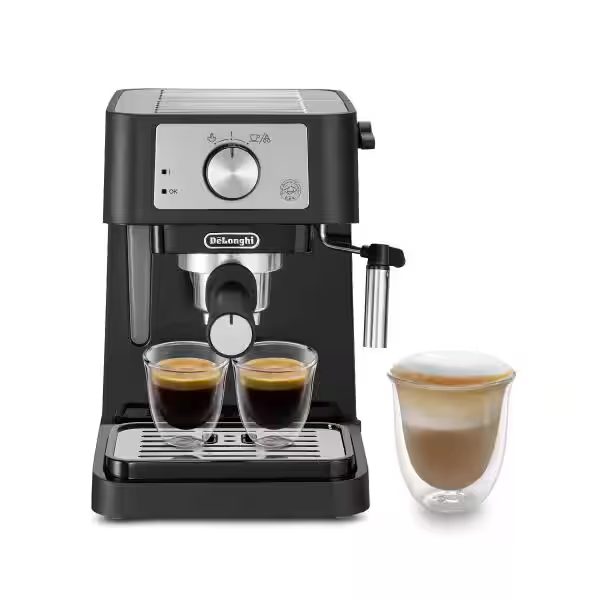
De'Longhi
13,810 owner ratings — the strongest crowd verdict we track.
Tip: add it to your Amazon cart while you decide — it stays saved there, with no obligation to buy.
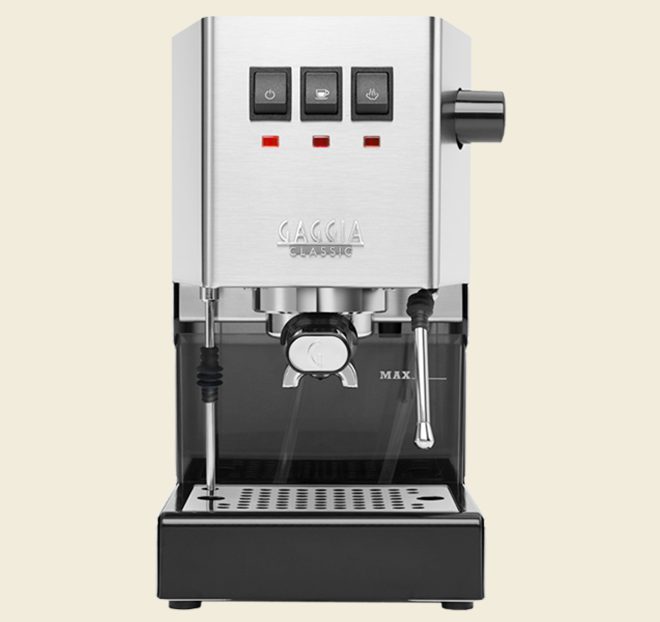
Gaggia
4.5★ average owner rating — the highest satisfaction signal in the category.
Tip: add it to your Amazon cart while you decide — it stays saved there, with no obligation to buy.
Bought from the merchant, backed by their warranty and returns — details in our Disclaimer →
All 8 models
One card per model — official image, 0–10 data score, key specs. Cards are sorted by score; flip the order with the control below.
Bought from the merchant, backed by their warranty and returns — details in our Disclaimer →
9.3/10
Breville
2.4/10
De'Longhi
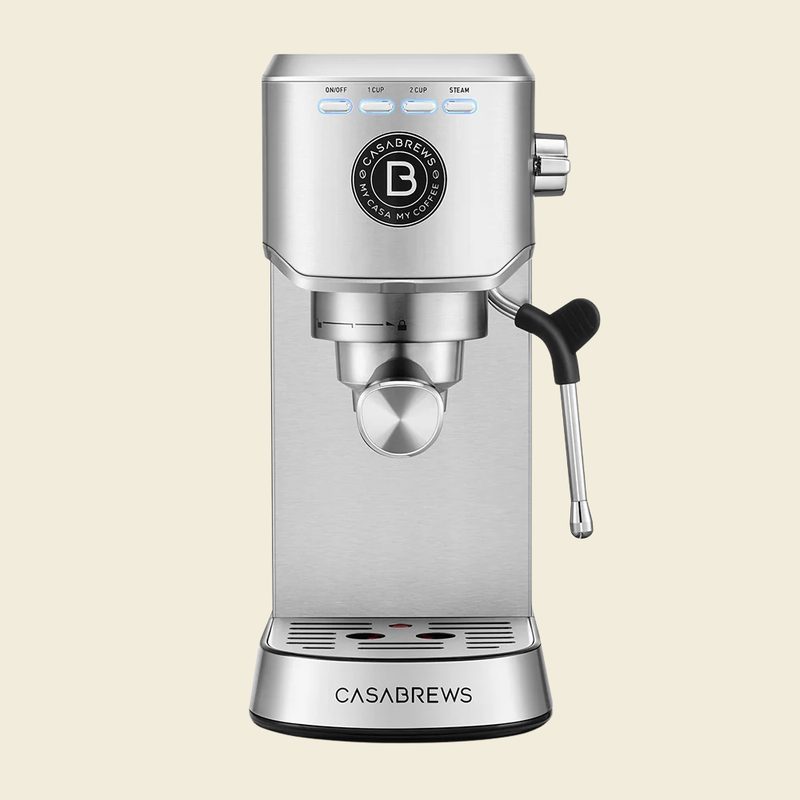 6.3/10
CASABREWS
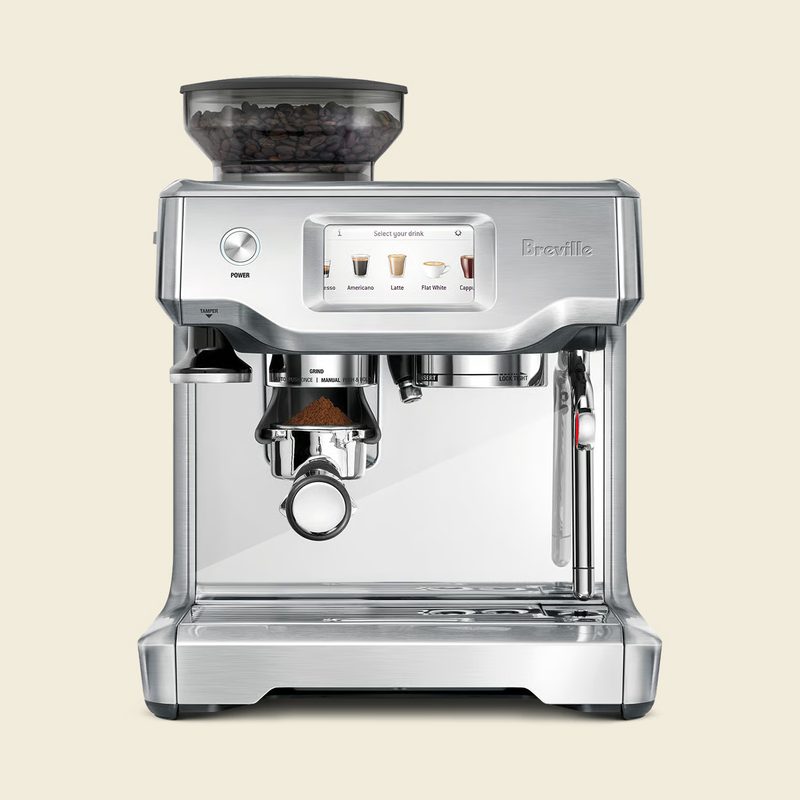 1.7/10
Breville
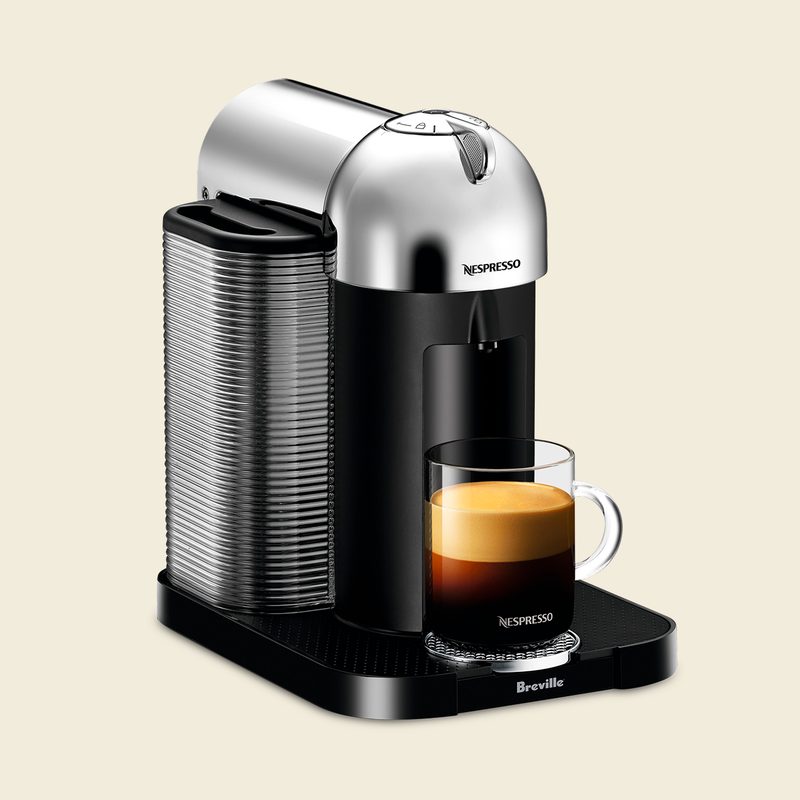 2.5/10
Nespresso
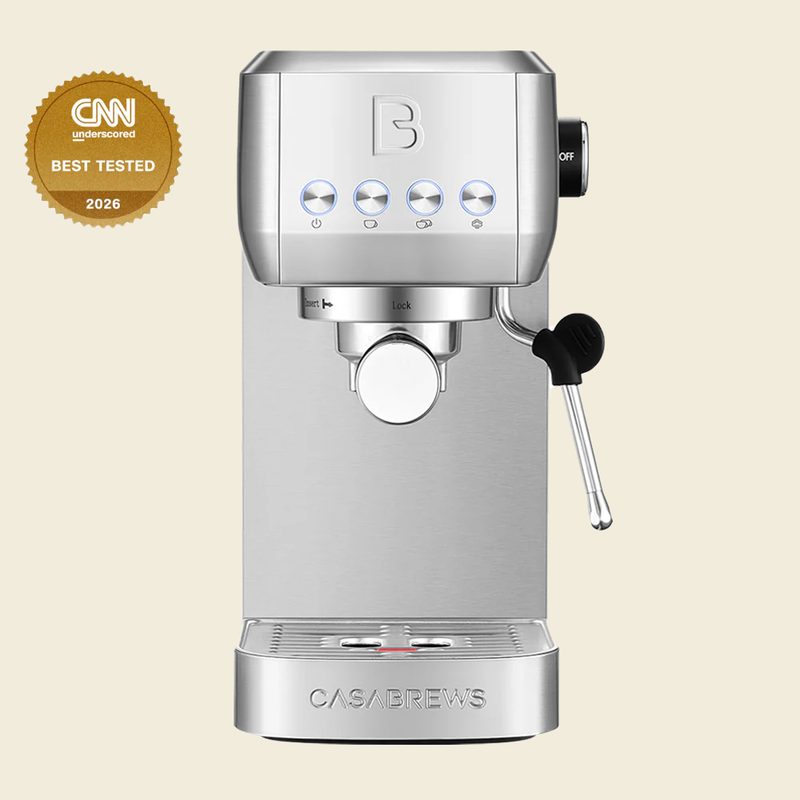 2.0/10
CASABREWS
4.7/10
Gaggia
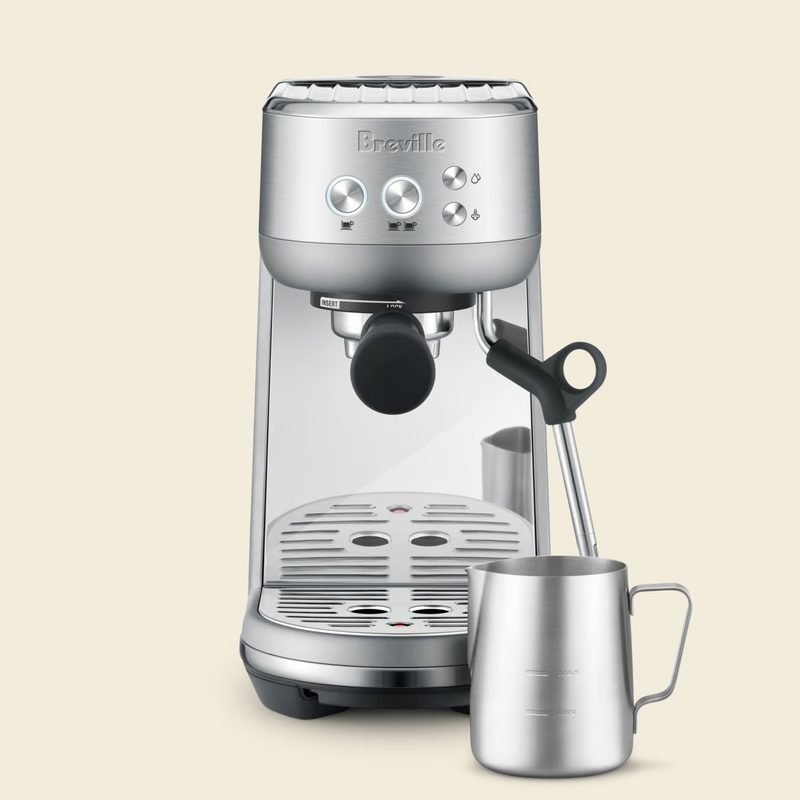 0.4/10
Breville
The physics
Espresso extraction is defined around roughly 9 bars of pressure at the coffee puck. The 15–20 bar figure on the box is the pump's maximum output — machines regulate it down with an over-pressure valve. A “20 bar” machine makes the same ~9-bar shot as a “15 bar” one.
The consequence
If a machine's regulation is sloppy, excess pump pressure can actually channel and over-extract — bitter shots from a “better” spec. This is why our scoring ignores bar ratings entirely: they carry no information about what reaches the cup.
The better signals
Owner ratings (30%), review volume (35%), and sales rank (35%) — signals from people who actually pulled shots. Combined with documented features like PID control and boiler type, they predict satisfaction far better than any pump claim. Full formula on the methodology page.
The data
Sorted by owner-review count, most first. Missing specs show as — and are excluded from that model's score with the remaining weights rescaled. Full formula on the methodology page ↗
| Product | Score | Advertised Pump (bar) | Boiler Type | PID Control | Rating | |
|---|---|---|---|---|---|---|
| 9.3 | 15 | Thermocoil | Yes | 4.4 | Amazon ↗ | |
| 2.4 | 15 | Stainless steel boiler | No | 4.1 | Amazon ↗ | |
|
|
6.3 | 20 | Thermal block | No | 4.4 | Amazon ↗ |
| 1.7 | 15 | ThermoJet | Yes | 4.3 | Amazon ↗ | |
| 2.5 | — | Capsule system (Centrifusion) | No | 4.3 | Amazon ↗ | |
| 2.0 | 20 | Thermal block | Yes | 4.3 | Amazon ↗ | |
| 4.7 | 9 | Single boiler (aluminum) | No | 4.5 | Amazon ↗ | |
| 0.4 | 15 | ThermoJet | Yes | 4.1 | Amazon ↗ |
Source: official manufacturer specifications and Amazon owner-rating counts, collected 2026-09-15. No prices, no sponsored placements — ever. Bought from the merchant, backed by their warranty and returns.
Tip: add any contender to your Amazon cart while you compare — it stays saved there, with no obligation to buy.
Keep reading
All Espresso Machines, compared → · Best Espresso Machines for Beginners, Scored on Data → · How we score →