What can 1,000 Wh actually run?
One kilowatt-hour is the most-sold size in portable power — and the most hand-waved. This page answers the question with arithmetic: the 5 tracked units in this class (1,024–1,152 Wh) against the loads people actually ask about. No prices, no hands-on claims, just division.
Affiliate disclosure: this guide contains links to Amazon. As an Amazon Associate we earn from qualifying purchases made through those links — at no extra cost to you. Commissions never enter our scoring formula, and no brand can pay for placement here.
Step one
Watts are speed, watt-hours are the tank
Every "can it run X" question has two separate gates:
- The output gate (watts). The inverter's continuous rating decides whether a device turns on at all. The 1 kWh class we track carries 1,500–1,800 W inverters — enough for nearly anything in a home except big heating appliances.
- The energy gate (watt-hours). The battery decides how long:
hours = capacity (Wh) × 0.85 ÷ draw (W). The 0.85 reserves roughly 15% for inverter losses and the battery cutoff — a conservative planning figure, not a lab measurement.
So "1,000 Wh" means: one hour at 1,000 W, ten hours at 100 W, or about three nights of a humidifier-off CPAP. Same tank — different speeds of emptying it.
Step two · the big table
One charge, in real terms
Every cell is capacity × 85% ÷ the load's typical draw, computed from each unit's official specs. A dash means the inverter cannot supply that load; † means the load equals the unit's rated output exactly — it runs, but with zero headroom. Wattages are planning values — verify against your own devices' nameplates.
| Load (typical draw) |
Anker SOLIX C1000 Gen 2 Portable Power Station | 1,024Wh LiFePO4 Battery, Full Charge in 49 Min, 2,000W Solar Generator (Peak 3,000W) for UPS, Outdoor and Emergency Use 1,024 Wh · 2,000 W Amazon ↗ |
EcoFlow DELTA 3 1,024 Wh · 1,800 W Amazon ↗ |
Jackery Explorer 1000 v2 1,070 Wh · 1,500 W Amazon ↗ |
Bluetti AC180 1,152 Wh · 1,800 W Amazon ↗ BLUETTI ↗ |
Anker SOLIX C1000 1,056 Wh · 1,800 W Amazon ↗ |
|---|---|---|---|---|---|
| Phone charges · 15 W 15 Wh per charge, planning figure |
58× | 58× | 60× | 65× | 59× |
| Wi-Fi router · 15 W internet stays up if the ISP side is alive |
58 h | 58 h | 61 h | 65 h | 60 h |
| CPAP, humidifier off · 40 W 8 h of sleep per night |
2.7 | 2.7 | 2.8 | 3.1 | 2.8 |
| Five LED bulbs · 50 W 5 × 10 W LED bulbs |
17 h | 17 h | 18 h | 20 h | 18 h |
| Laptop · 60 W in use while charging |
15 h | 15 h | 15 h | 16 h | 15 h |
| 55" LED TV · 100 W typical mid-size set |
8.7 h | 8.7 h | 9.1 h | 9.8 h | 9.0 h |
| Full-size refrigerator · 150 W compressor run time — cycling stretches the wall-clock coverage |
5.8 h | 5.8 h | 6.1 h | 6.5 h | 6.0 h |
| Microwave · 1000 W full power, in short bursts |
52 min | 52 min | 55 min | 59 min | 54 min |
| Space heater · 1500 W matches a 1,500 W inverter exactly — zero headroom |
35 min | 35 min | 36 min † | 39 min | 36 min |
Source: official manufacturer specifications for capacity and inverter output. Arithmetic on published specs, not a discharge test. Fridge coverage is compressor run time — real compressors cycle, stretching wall-clock hours well beyond the number shown.
Step three
What 1 kWh will never run
Honesty section. Big resistance heating and whole-home loads live outside this class: central air conditioning, electric water heaters, dryers, ranges, and EV charging all draw several thousand watts continuously — beyond any inverter in the 1 kWh class, and a full charge would last minutes regardless. A window air conditioner sits on the boundary: it can start on these inverters but drains the tank in roughly an hour of compressor run time. If your use case is heat or cooling, skip this class and size up — the power-outage guide has the multi-kWh math.
Step four · refilling the tank
How fast does solar put it back?
Everything above is a countdown — solar turns it into a loop. Dividing each unit's capacity by its rated maximum solar input gives the theoretical minimum 0→100% refill time under ideal sun, straight from official specs. Fastest first:
| Model | Capacity | Max solar input | Ideal-sun refill |
|---|---|---|---|
| Anker SOLIX C1000 Gen 2 Portable Power Station | 1,024Wh LiFePO4 Battery, Full Charge in 49 Min, 2,000W Solar Generator (Peak 3,000W) for UPS, Outdoor and Emergency Use | 1,024 Wh | 600 W | ≈ 1.7 of peak sun · fastest in class |
| Anker SOLIX C1000 | 1,056 Wh | 600 W | ≈ 1.8 of peak sun |
| EcoFlow DELTA 3 | 1,024 Wh | 500 W | ≈ 2.0 of peak sun |
| Bluetti AC180 | 1,152 Wh | 500 W | ≈ 2.3 of peak sun |
| Jackery Explorer 1000 v2 | 1,070 Wh | 400 W | ≈ 2.7 of peak sun |
Nameplate input assumes enough panels to saturate it and perfect conditions; real harvest depends on panel wattage, angle, season, and weather — treat these as best-case floors, not promises. For panel pairing, see the solar panel category; for multi-day outage math, the power-outage guide.
Step five
The class, ranked by the formula
All 5 tracked units in the 1 kWh class, ordered by the published 0–10 score — capacity 25%, AC output 25%, cycle life 20%, portability 15%, solar input 15%.
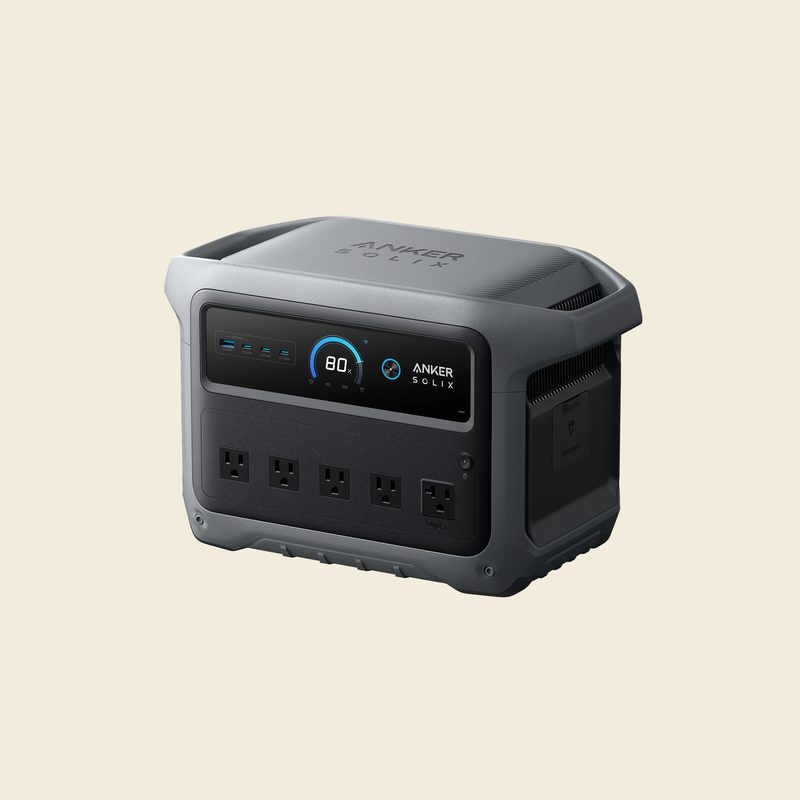
Anker
Anker SOLIX C1000 Gen 2 Portable Power Station | 1,024Wh LiFePO4 Battery, Full Charge in 49 Min, 2,000W Solar Generator (Peak 3,000W) for UPS, Outdoor and Emergency Use
weekend RV and van-life duty — fridges, fans, and cooking gear for a couple of days.
Tip: add it to your Amazon cart while you decide — it stays saved there, with no obligation to buy.
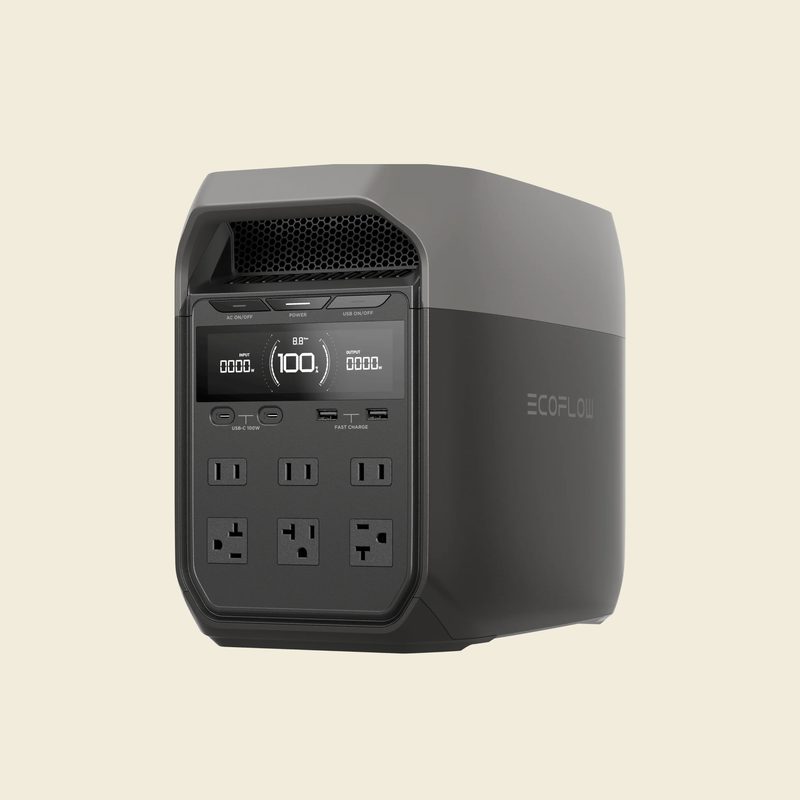
EcoFlow
EcoFlow DELTA 3
weekend RV and van-life duty — fridges, fans, and cooking gear for a couple of days.
Tip: add it to your Amazon cart while you decide — it stays saved there, with no obligation to buy.
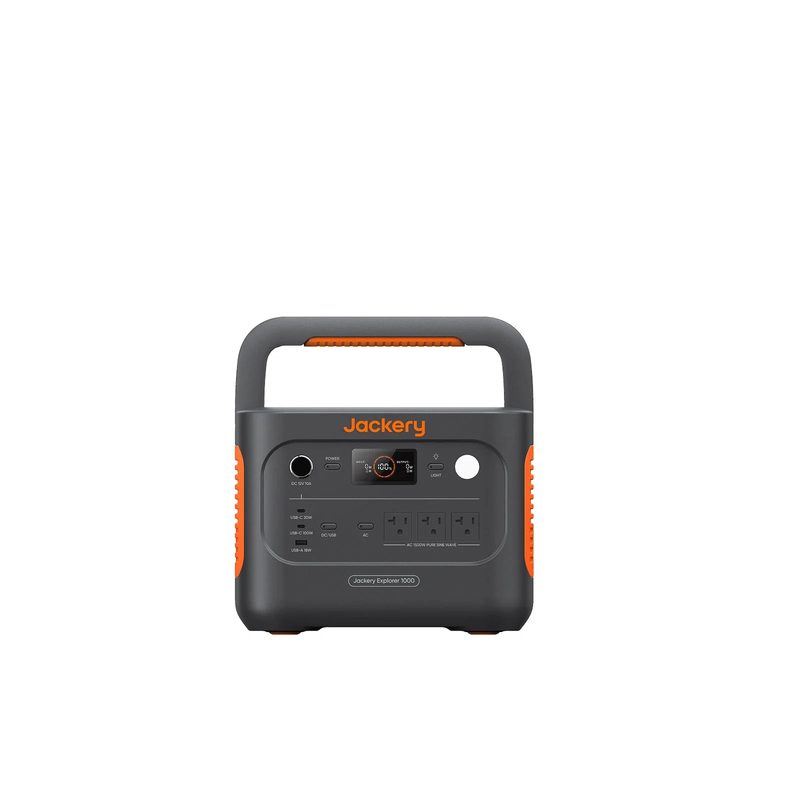
Jackery
Jackery Explorer 1000 v2
weekend RV and van-life duty — fridges, fans, and cooking gear for a couple of days.
Tip: add it to your Amazon cart while you decide — it stays saved there, with no obligation to buy.
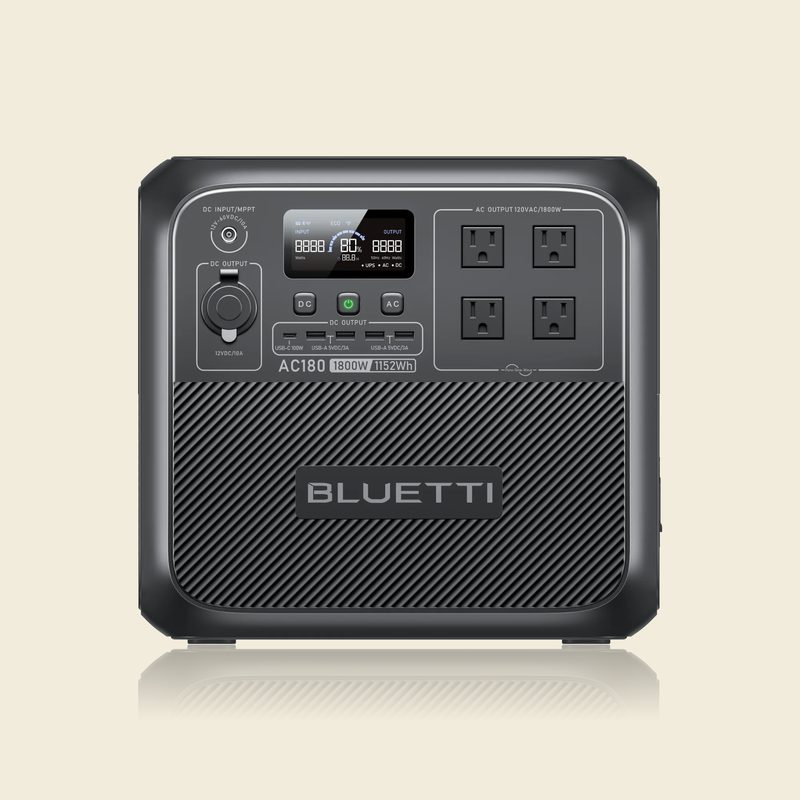
Bluetti
Bluetti AC180
weekend RV and van-life duty — fridges, fans, and cooking gear for a couple of days.
Tip: add it to your Amazon cart while you decide — it stays saved there, with no obligation to buy.
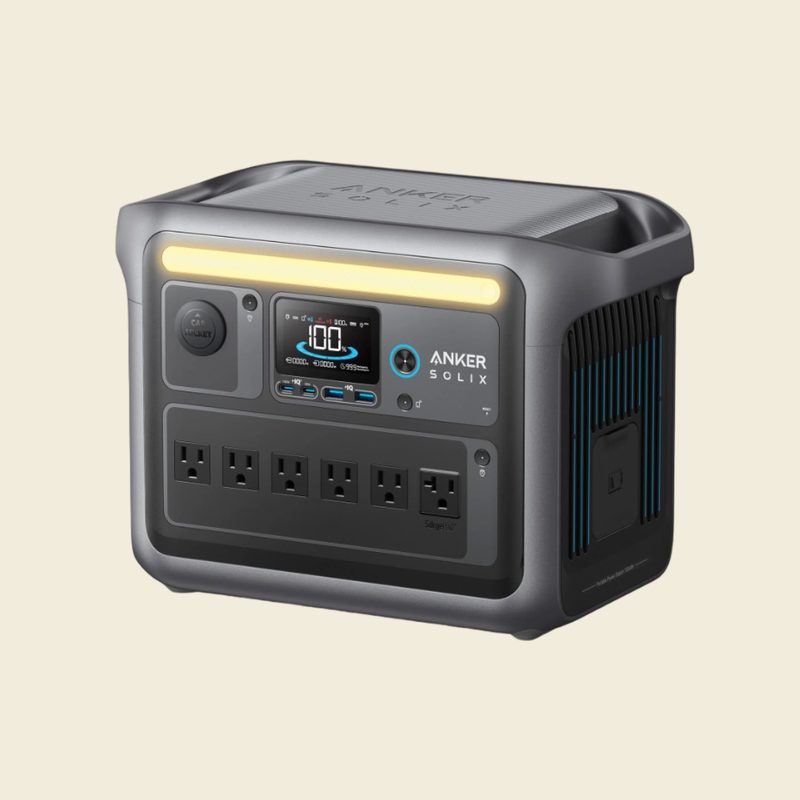
Anker
Anker SOLIX C1000
weekend RV and van-life duty — fridges, fans, and cooking gear for a couple of days.
Tip: add it to your Amazon cart while you decide — it stays saved there, with no obligation to buy.
Right-sizing
When 1 kWh is the wrong answer
- Too big: if the load list is a phone, a laptop, and a CPAP, a sub-300 Wh unit does it at a quarter of the weight — the CPAP camping guide has nights-per-charge for every size.
- Too small: multi-day outages, refrigerators around the clock, or any heating load point to the 2 kWh-and-up class — see the power-outage guide.
- Brand-shopping within the class: three of these four units face off in the Jackery vs EcoFlow vs Bluetti showdown, row by row.
- Pricing: we never display prices we cannot verify live — current pricing and availability are on Amazon, one click from any card above.