The power-outage buying guide
When the grid drops, two numbers decide your evening: how many watt-hours you have and how many watts your essentials draw. This guide turns the specs of every unit we track into hours of runtime — no prices, no hands-on claims, just arithmetic.
Affiliate disclosure: this guide contains links to Amazon. As an Amazon Associate we earn from qualifying purchases made through those links — at no extra cost to you. Commissions never enter our scoring formula, and no brand can pay for placement here.
Step one
The only math you need
Runtime is division:
hours of runtime = battery capacity (Wh) × 0.85 ÷ device draw (W)
The 0.85 factor reserves roughly 15% for inverter conversion losses and the battery management system's cutoff — a conservative planning figure, not a lab measurement. Worked example with a real unit from our tracked set: the Anker SOLIX C1000 Gen 2 Portable Power Station | 1,024Wh LiFePO4 Battery, Full Charge in 49 Min, 2,000W Solar Generator (Peak 3,000W) for UPS, Outdoor and Emergency Use carries 1,024 Wh. Against a 150 W refrigerator load that is 1,024 × 0.85 ÷ 150 ≈ 5.8 hours of compressor run time. A real fridge cycles its compressor on and off, so the wall-clock coverage stretches well beyond that figure.
Step two
What the essentials actually draw
These are typical running watts for common outage loads — treat them as planning placeholders and confirm against the nameplate label or manual of your devices before you commit.
| Load | Typical running watts | Notes |
|---|---|---|
| Phone charging | 10 W | per phone, while charging |
| Wi-Fi router + modem | 15 W | keeps internet alive if the ISP side is up |
| CPAP, humidifier off | 40 W | heated humidifier roughly doubles the draw |
| Five LED bulbs | 50 W | 5 × 10 W LED bulbs |
| Full-size refrigerator | 150 W | running watts; compressor cycles on/off |
| Gas furnace blower | 400 W | typical blower; check your nameplate |
| Microwave | 1000 W | full power; short bursts only |
Refrigerator and furnace motors pull a brief startup surge several times their running watts — that is why a unit's surge rating matters as much as its continuous output. Every surge figure in this guide is the manufacturer's own spec, linked from each product page.
Step three · the big table
Runtime, computed for every unit we track
Hours of runtime at 85% usable capacity, for each of the 13 power stations in our database. A dash means the unit's inverter cannot supply that load at all. Divide hours by 24 for days.
| Model | Capacity | AC output | Phone 10 W | Wi-Fi 15 W | CPAP 40 W | LED lights 50 W | Fridge 150 W | Furnace fan 400 W | Microwave 1000 W |
|---|---|---|---|---|---|---|---|---|---|
| EcoFlow DELTA Pro 3 | 4,096 Wh | 4,000 W | 348 | 232 | 87 | 70 | 23 | 8.7 | 3.5 |
| Anker SOLIX F3800 | 3,840 Wh | 6,000 W | 326 | 218 | 82 | 65 | 22 | 8.2 | 3.3 |
| Jackery Explorer 2000 Plus | 2,042.8 Wh | 3,000 W | 174 | 116 | 43 | 35 | 12 | 4.3 | 1.7 |
| Anker SOLIX C1000 Gen 2 Portable Power Station | 1,024Wh LiFePO4 Battery, Full Charge in 49 Min, 2,000W Solar Generator (Peak 3,000W) for UPS, Outdoor and Emergency Use | 1,024 Wh | 2,000 W | 87 | 58 | 22 | 17 | 5.8 | 2.2 | 0.9 |
| EcoFlow DELTA 3 | 1,024 Wh | 1,800 W | 87 | 58 | 22 | 17 | 5.8 | 2.2 | 0.9 |
| Jackery Explorer 1000 v2 | 1,070 Wh | 1,500 W | 91 | 61 | 23 | 18 | 6.1 | 2.3 | 0.9 |
| Bluetti AC180 | 1,152 Wh | 1,800 W | 98 | 65 | 24 | 20 | 6.5 | 2.4 | 1.0 |
| Bluetti AC200L | 2,048 Wh | 2,400 W | 174 | 116 | 44 | 35 | 12 | 4.4 | 1.7 |
| Jackery Explorer 300 Plus | 288 Wh | 300 W | 24 | 16 | 6.1 | 4.9 | 1.6 | — | — |
| Anker SOLIX C1000 | 1,056 Wh | 1,800 W | 90 | 60 | 22 | 18 | 6.0 | 2.2 | 0.9 |
| BLUETTI Elite 30 V2 Portable Power Station | 288 Wh | 600 W | 24 | 16 | 6.1 | 4.9 | 1.6 | 0.6 | — |
| Anker SOLIX C300 | 288 Wh | 300 W | 24 | 16 | 6.1 | 4.9 | 1.6 | — | — |
| EcoFlow RIVER 3 | 245 Wh | 300 W | 21 | 14 | 5.2 | 4.2 | 1.4 | — | — |
Source: official manufacturer specifications for every cell's inputs. This is arithmetic on published specs, not a discharge test.
Step four · the reality check
Everything at once: the essentials bundle
One load at a time is how an outage feels in hour one. By hour six the fridge, the router, and the lights are all on the same battery. This table runs that bundle — a 215 W combined draw (refrigerator 150 W + Wi-Fi 15 W + five LED bulbs 50 W) — against every unit: capacity × 85% ÷ 215 W, sorted by coverage.
| Model | Capacity | AC output | Bundle runtime | In days |
|---|---|---|---|---|
| EcoFlow DELTA Pro 3 | 4,096 Wh | 4,000 W | 16 h | 0.7 |
| Anker SOLIX F3800 | 3,840 Wh | 6,000 W | 15 h | 0.6 |
| Bluetti AC200L | 2,048 Wh | 2,400 W | 8.1 h | 0.3 |
| Jackery Explorer 2000 Plus | 2,042.8 Wh | 3,000 W | 8.1 h | 0.3 |
| Bluetti AC180 | 1,152 Wh | 1,800 W | 4.6 h | 0.2 |
| Jackery Explorer 1000 v2 | 1,070 Wh | 1,500 W | 4.2 h | 0.2 |
| Anker SOLIX C1000 | 1,056 Wh | 1,800 W | 4.2 h | 0.2 |
| Anker SOLIX C1000 Gen 2 Portable Power Station | 1,024Wh LiFePO4 Battery, Full Charge in 49 Min, 2,000W Solar Generator (Peak 3,000W) for UPS, Outdoor and Emergency Use | 1,024 Wh | 2,000 W | 4.0 h | 0.2 |
| EcoFlow DELTA 3 | 1,024 Wh | 1,800 W | 4.0 h | 0.2 |
| Jackery Explorer 300 Plus | 288 Wh | 300 W | 1.1 h | <0.1 |
| BLUETTI Elite 30 V2 Portable Power Station | 288 Wh | 600 W | 1.1 h | <0.1 |
| Anker SOLIX C300 | 288 Wh | 300 W | 1.1 h | <0.1 |
| EcoFlow RIVER 3 | 245 Wh | 300 W | 1.0 h | <0.1 |
A refrigerator's compressor cycles on and off, so real wall-clock coverage stretches beyond these continuous-draw figures — treat this table as the conservative floor. And when a unit lands under two hours here, that is the data telling you something plain: it is a camping battery, not outage insurance.
Step five
Why solar input decides multi-day coverage
A battery alone is a countdown. Pair it with panels and the question becomes how fast it refills. Dividing capacity by maximum solar input gives the theoretical minimum refill time under ideal sun:
| Model | Capacity | Max solar input | Ideal-sun refill |
|---|---|---|---|
| EcoFlow DELTA Pro 3 | 4,096 Wh | 2,600 W | ≈ 1.6 of peak sun |
| Anker SOLIX F3800 | 3,840 Wh | 2,400 W | ≈ 1.6 of peak sun |
| Jackery Explorer 2000 Plus | 2,042.8 Wh | 1,400 W | ≈ 1.5 of peak sun |
| Anker SOLIX C1000 Gen 2 Portable Power Station | 1,024Wh LiFePO4 Battery, Full Charge in 49 Min, 2,000W Solar Generator (Peak 3,000W) for UPS, Outdoor and Emergency Use | 1,024 Wh | 600 W | ≈ 1.7 of peak sun |
| EcoFlow DELTA 3 | 1,024 Wh | 500 W | ≈ 2.0 of peak sun |
| Jackery Explorer 1000 v2 | 1,070 Wh | 400 W | ≈ 2.7 of peak sun |
| Bluetti AC180 | 1,152 Wh | 500 W | ≈ 2.3 of peak sun |
| Bluetti AC200L | 2,048 Wh | 1,200 W | ≈ 1.7 of peak sun |
| Jackery Explorer 300 Plus | 288 Wh | 100 W | ≈ 2.9 of peak sun |
| Anker SOLIX C1000 | 1,056 Wh | 600 W | ≈ 1.8 of peak sun |
| BLUETTI Elite 30 V2 Portable Power Station | 288 Wh | 200 W | ≈ 1.4 of peak sun |
| Anker SOLIX C300 | 288 Wh | 100 W | ≈ 2.9 of peak sun |
| EcoFlow RIVER 3 | 245 Wh | 110 W | ≈ 2.2 of peak sun |
Nameplate input assumes enough panels to saturate it and perfect conditions; real harvest depends on panel wattage, angle, season, and weather.
Step six
Picks by outage scenario
The highest-scoring unit in each capacity class, under the published 0–10 formula — capacity 25%, AC output 25%, cycle life 20%, portability 15%, solar input 15%.
Anker
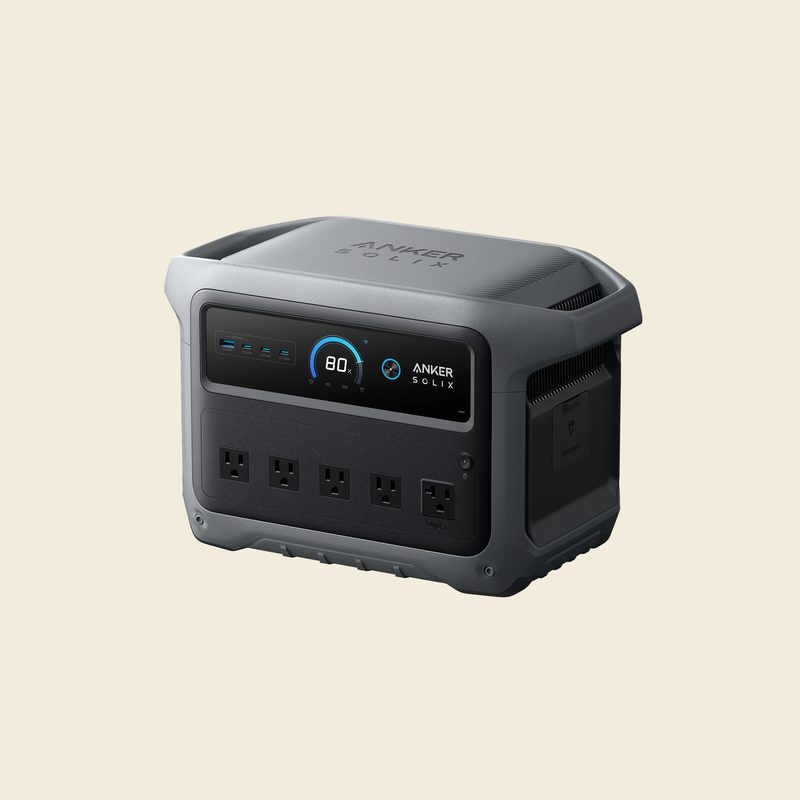
Anker SOLIX C1000 Gen 2 Portable Power Station | 1,024Wh LiFePO4 Battery, Full Charge in 49 Min, 2,000W Solar Generator (Peak 3,000W) for UPS, Outdoor and Emergency Use
For one night of fridge, lights, phones, and Wi-Fi in a package one adult can still carry. Strongest inverter in its class — 2,000 W continuous.
Tip: add it to your Amazon cart while you decide — it stays saved there, with no obligation to buy.
Jackery
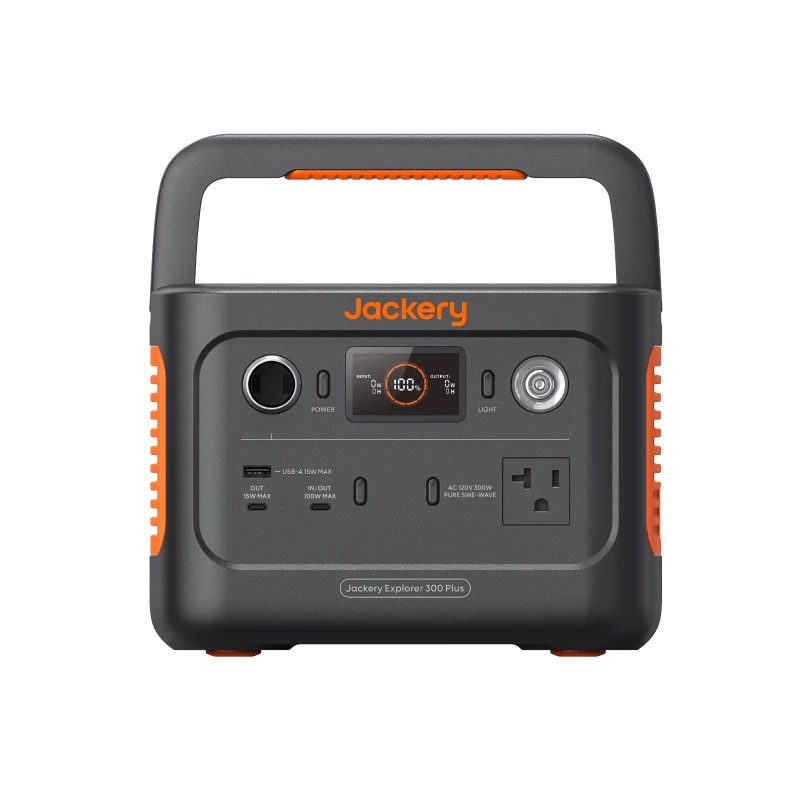
Jackery Explorer 300 Plus
For phones, laptops, and LED light during a short outage — it will not start a refrigerator, and it isn't meant to. Tied for the biggest battery in its class — 288 Wh.
Tip: add it to your Amazon cart while you decide — it stays saved there, with no obligation to buy.
EcoFlow
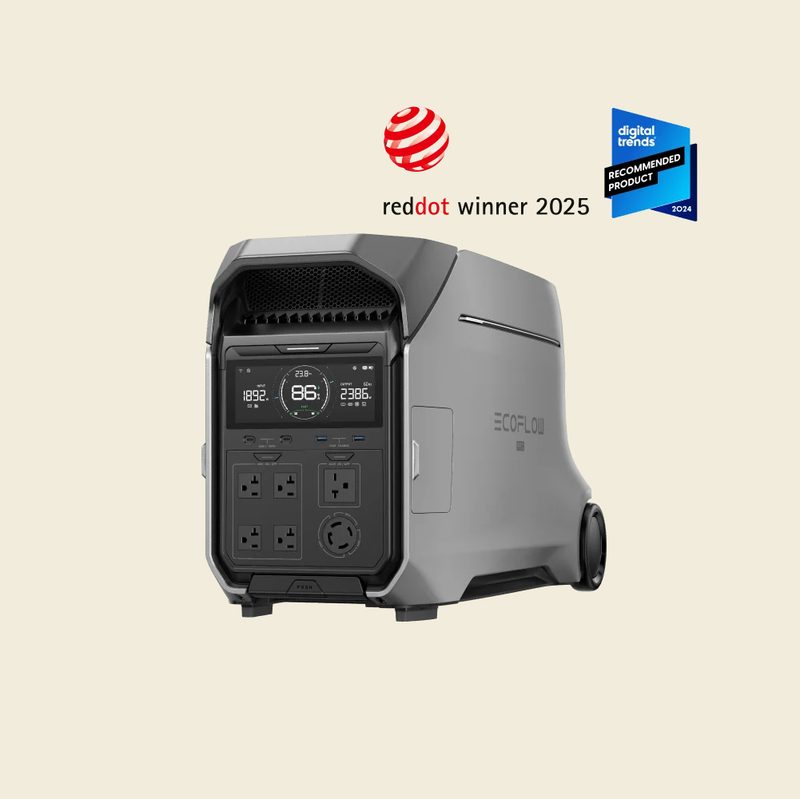
EcoFlow DELTA Pro 3
For refrigerator, furnace blower, lights and comms through a multi-day outage — and the solar input to refill between storms. Biggest battery in its class — 4,096 Wh on tap.
Tip: add it to your Amazon cart while you decide — it stays saved there, with no obligation to buy.
Before you buy
The five-minute checklist
- List your loads. Read the nameplate or manual of each device you'd run in a blackout and write down the watts. Your list — not a marketing page — sets the size.
- Check surge headroom. Anything with a motor or compressor (fridge, furnace blower, pump) needs a unit whose surge rating clears the startup spike.
- Plan the refill. For outages beyond a day, solar input watts matter as much as capacity. A big battery with a small input is a one-shot reserve.
- Weight is a feature. Units above 60 lbs are two-person lifts — fine parked next to a fridge, wrong for an apartment stairwell.
- Verify current pricing on Amazon. We never display prices we cannot verify live, so the buy links go straight to the listing.
Methodology, data sources, and our full monetization policy live on the How We Score page. Every spec above traces to the official brand page linked from each product sheet.